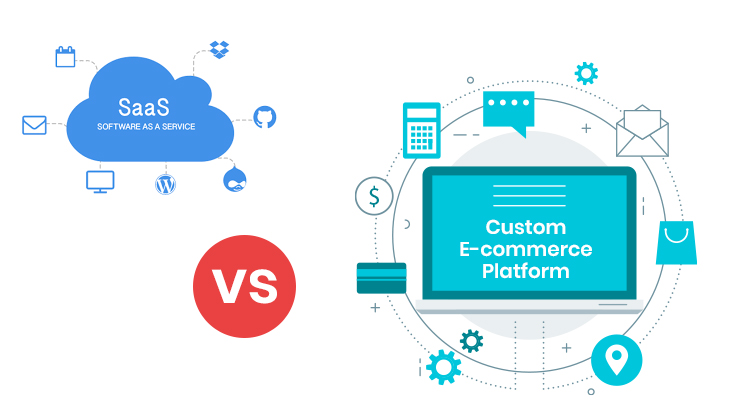
Custom vs SaaS eCommerce Platforms for Growing Businesses
Choosing the right eCommerce platform is one of the most critical decisions a growing business can make. Many SMBs start with SaaS platforms like Shopify or BigCommerce because they’re fast and convenient—but convenience often comes at the cost of flexibility and long-term scalability.
In this article, we’ll break down the real differences between custom and SaaS eCommerce platforms so growing businesses can make informed, future-proof decisions.
Understanding SaaS eCommerce Platforms
SaaS (Software as a Service) eCommerce platforms provide hosted solutions with predefined features. They handle hosting, security, and updates, making them attractive for startups and small teams with limited technical resources.
However, what you gain in simplicity, you often lose in control.
1. Where SaaS Platforms Start to Limit Growth
As businesses scale, SaaS platforms can introduce friction instead of enabling growth.
❌ Limited customization beyond templates
❌ Dependency on third-party apps for core features
❌ Increasing monthly and transaction-based costs
❌ Restricted access to backend logic and data
These limitations become especially painful when businesses need unique workflows or advanced integrations.
2. What Makes Custom eCommerce Platforms Different
A custom eCommerce platform is built specifically around your business processes, not generic use cases. This approach offers complete ownership and architectural freedom.
✅ Custom product and pricing logic
✅ Tailored checkout and user journeys
✅ Direct database and API control
✅ Seamless integration with ERP, CRM, or legacy systems
3. Scalability: Predictable vs Restricted
SaaS platforms scale within predefined limits. Custom platforms scale based on your infrastructure and business strategy.
For growing businesses expanding into new markets, B2B models, or high-traffic environments, custom eCommerce provides predictable performance without platform-imposed ceilings.
4. Cost Comparison Over Time
SaaS platforms appear cost-effective at the beginning, but costs rise as your business grows.
• Monthly subscriptions
• Paid apps and plugins
• Transaction and payment gateway fees
A custom platform requires upfront investment, but eliminates recurring dependency costs—making it more economical in the long run for serious growth.
5. Security, Compliance, and Data Ownership
With SaaS platforms, security policies and compliance standards are dictated by the provider. While this works for basic needs, it limits flexibility.
Custom eCommerce platforms allow:
✅ Custom security layers
✅ Compliance with region-specific regulations
✅ Full ownership of customer and transaction data
6. Which Option Is Right for Your Business?
SaaS platforms are suitable if:
• You’re validating a business idea
• Your requirements are standard
• Speed to market is your top priority
Custom platforms are better if:
• You’re planning long-term growth
• You need advanced integrations or workflows
• You want full control over performance and data
Final Thoughts
The choice between custom and SaaS eCommerce platforms is not about right or wrong—it’s about alignment with your growth strategy.
If your business is outgrowing SaaS limitations, a custom solution may be the smarter investment. Learn how we help businesses scale with our scalable eCommerce development for SMBs built for flexibility, performance, and long-term success.
📞 Let’s discuss the best eCommerce architecture for your business growth.

Written by: Editorial Team
 Facebook
 Instagram
Choosing Between Custom and SaaS eCommerce Platforms?
Growing your eCommerce business and unsure whether a custom platform or a SaaS solution is the right choice? QllmSoft helps businesses evaluate, build, and scale the right eCommerce architecture for long‑term growth.
Explore Custom eCommerce Development